Redesigning and improving investment portfolio dashboard for one of the world's largest crypto exchange. Focused on clarity, streamline progression, risk awareness, and new-user activation across 300M+ users.
Role
UX / Product Design
Focus
Research, IA sorting, Competitive Benchmarking
Usability Interview, Design with Constrains
Scope
6 responsive screens, End to end
tools
Figma, Claude
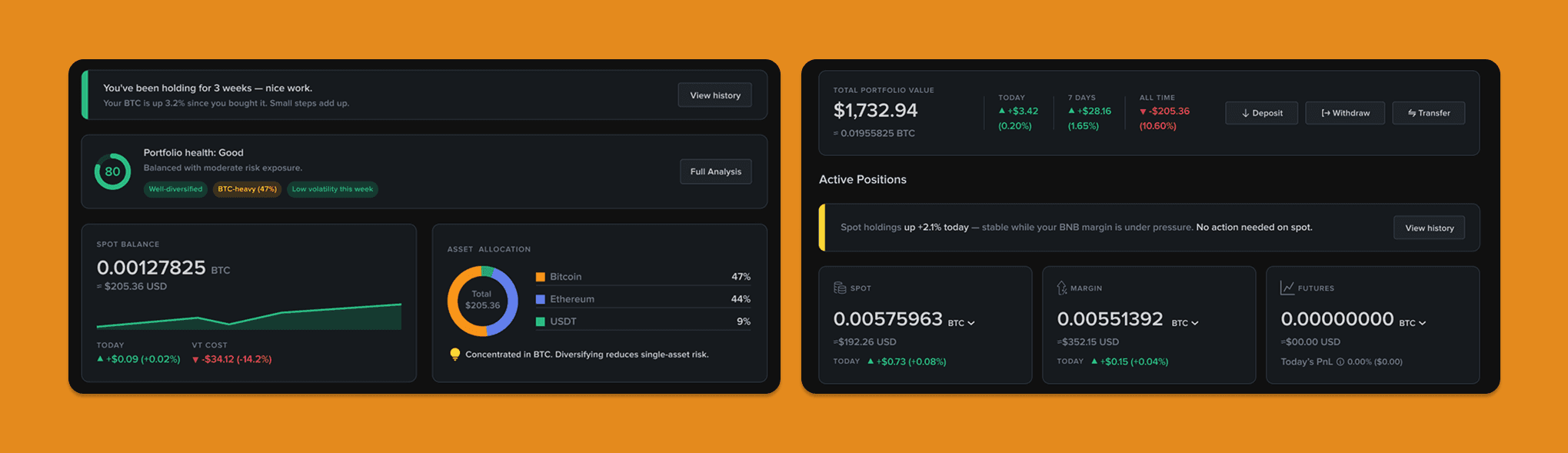
Unified portfolio summary across all wallet types
Binance splits funds across Spot, Margin, Funding, and Earn. I couldn't merge them (backend constraint), so I designed a persistent top bar that rolls everything into one total.
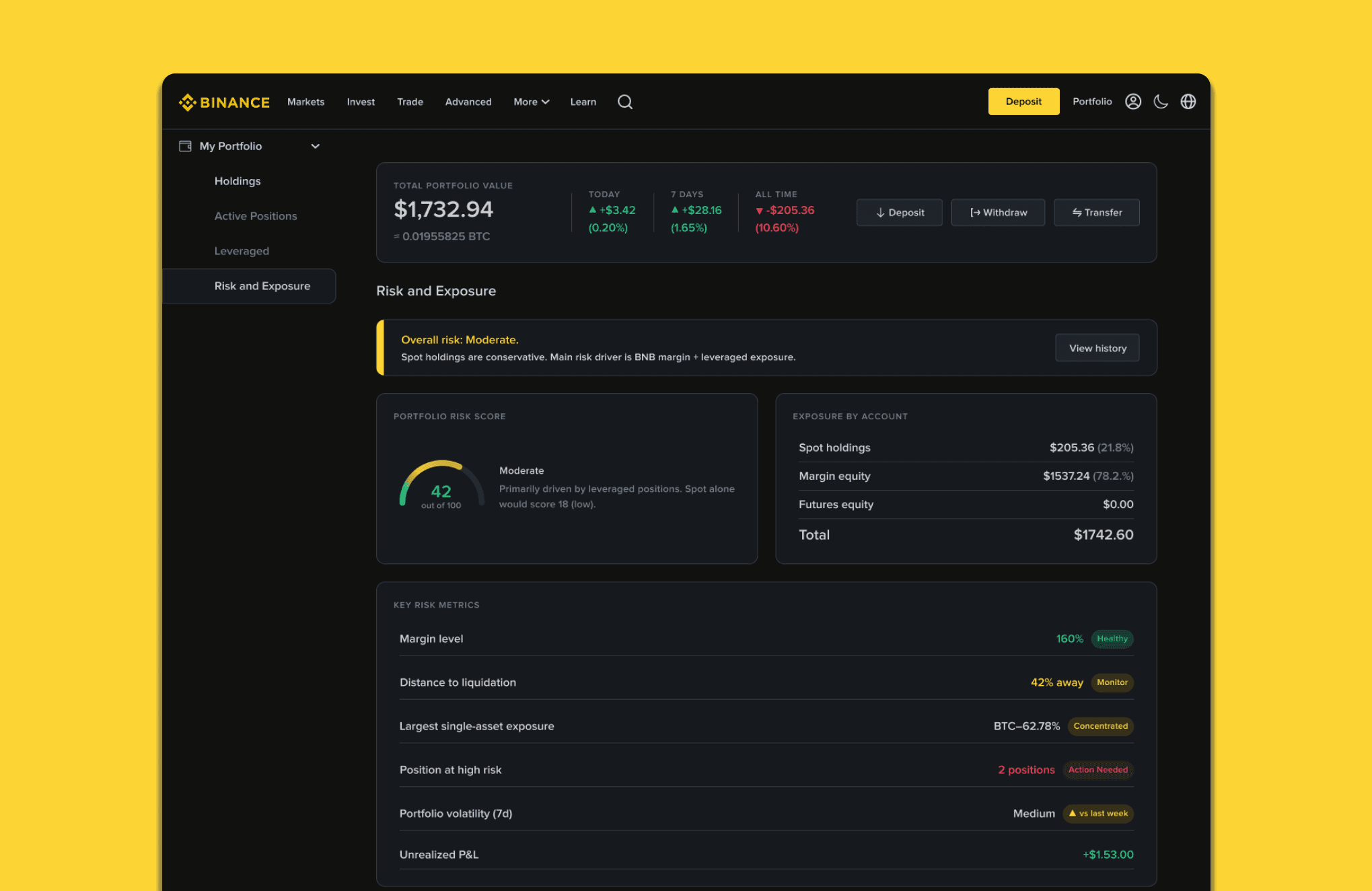
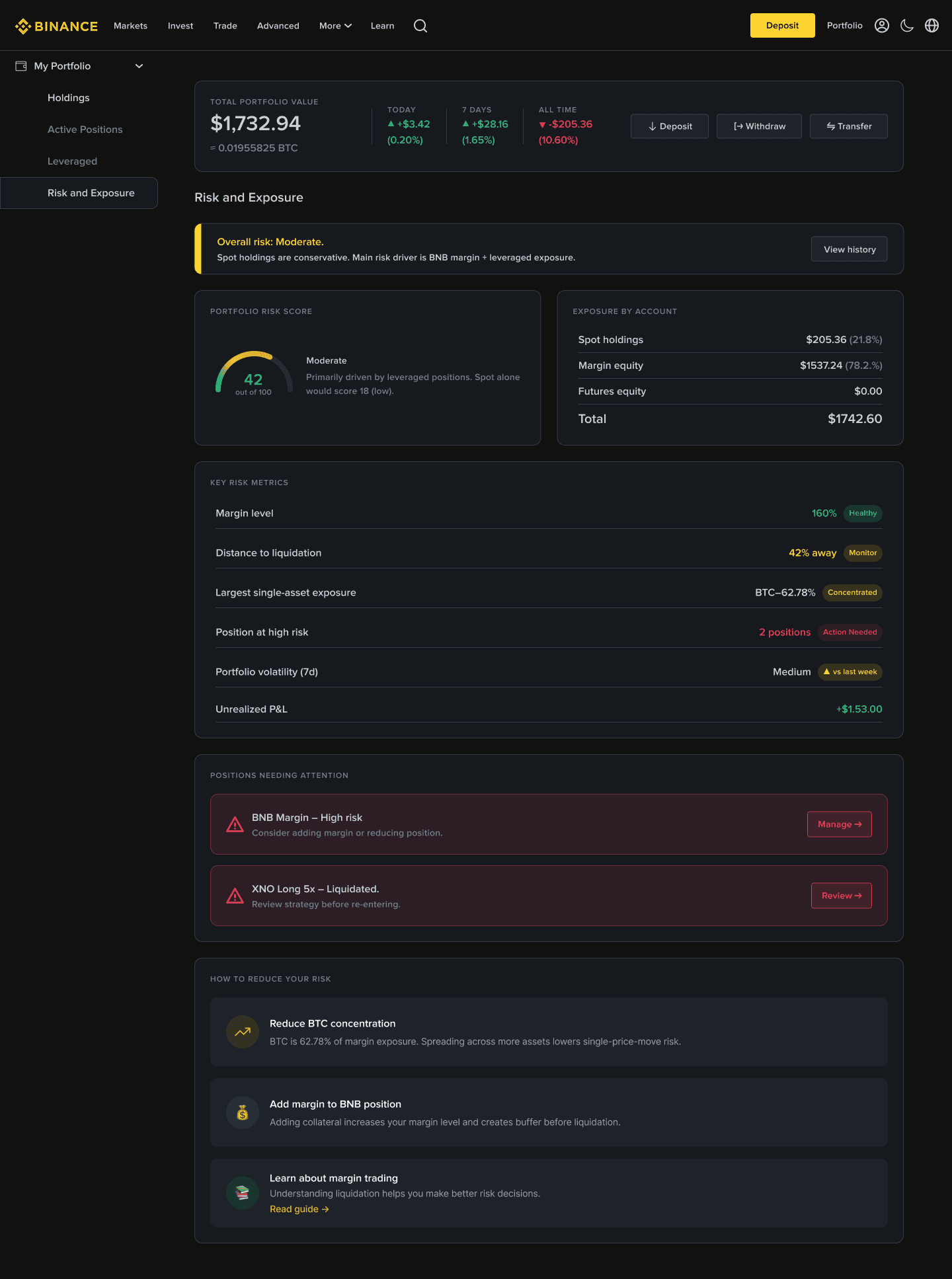
Risk & Exposure — a page no exchange has
A new page surfacing margin level, liquidation distance, and concentration with clear next steps. Users who understand their risk stay longer and make better decisions.
Regulatory-aware progressive disclosure
Margin and futures are geo-restricted. Rather than separate layouts, the Leveraged page smoothly disclosed. educational empty states when features aren't available, full details when they are.
New user onboarding for empty states
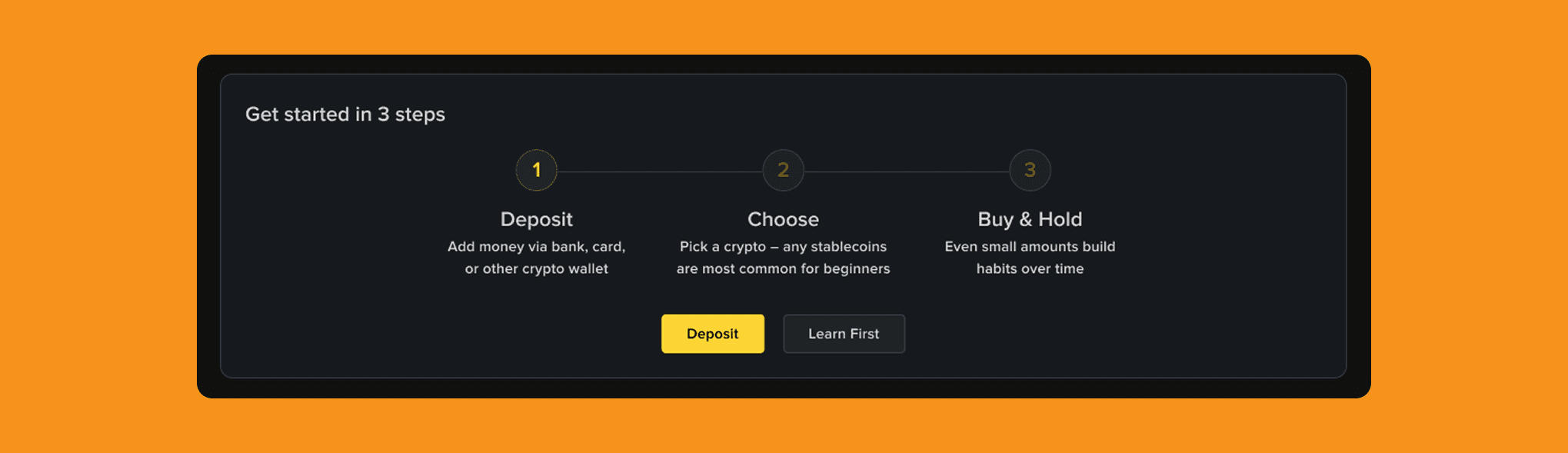
150K users sign up daily and land on an empty table. I designed a 3-step flow, locked feature previews, and a "Not ready?" learning path. Closing the gap between signup and first deposit.
00 – Design story
Trading in crypto feels so scary.
In 2025, I started taking crypto investing more seriously and chose Binance for its scale. After a few trades, I realized I didn’t actually understand my portfolio. My assets were scattered across different wallets, with no clear overview, cost basis, or sense of risk. It felt fragmented and harder than it should be to know where I stood. That disconnect became the starting point for this redesign.
The Core Question
How might we simplify the Binance portfolio to reduce the learning curve and make assets, cost basis, and risk clearly visible?
01 – market & Research
300M users, but one-size-fits none?
Binance was built by traders, for traders. Over time, more and more features were added—futures, margin, earn, NFTs—without really stepping back to question who the experience is for.
As I used the product, conducted user interviews, and looked through reviews and forums, a few patterns of friction began to show up:
Wallets feel scattered: Assets live across Spot, Funding, Margin, and Earn, with no cross-wallet P&L or risk.
Insights are hidden: Trading performance exists in Trading Insight, but it’s buried in a separate menu.
Onboarding is weak: Starting out feels confusing, there’s barely any guidance for new users.
02 – understand what's out there
Nobody is doing portfolio intelligence well.
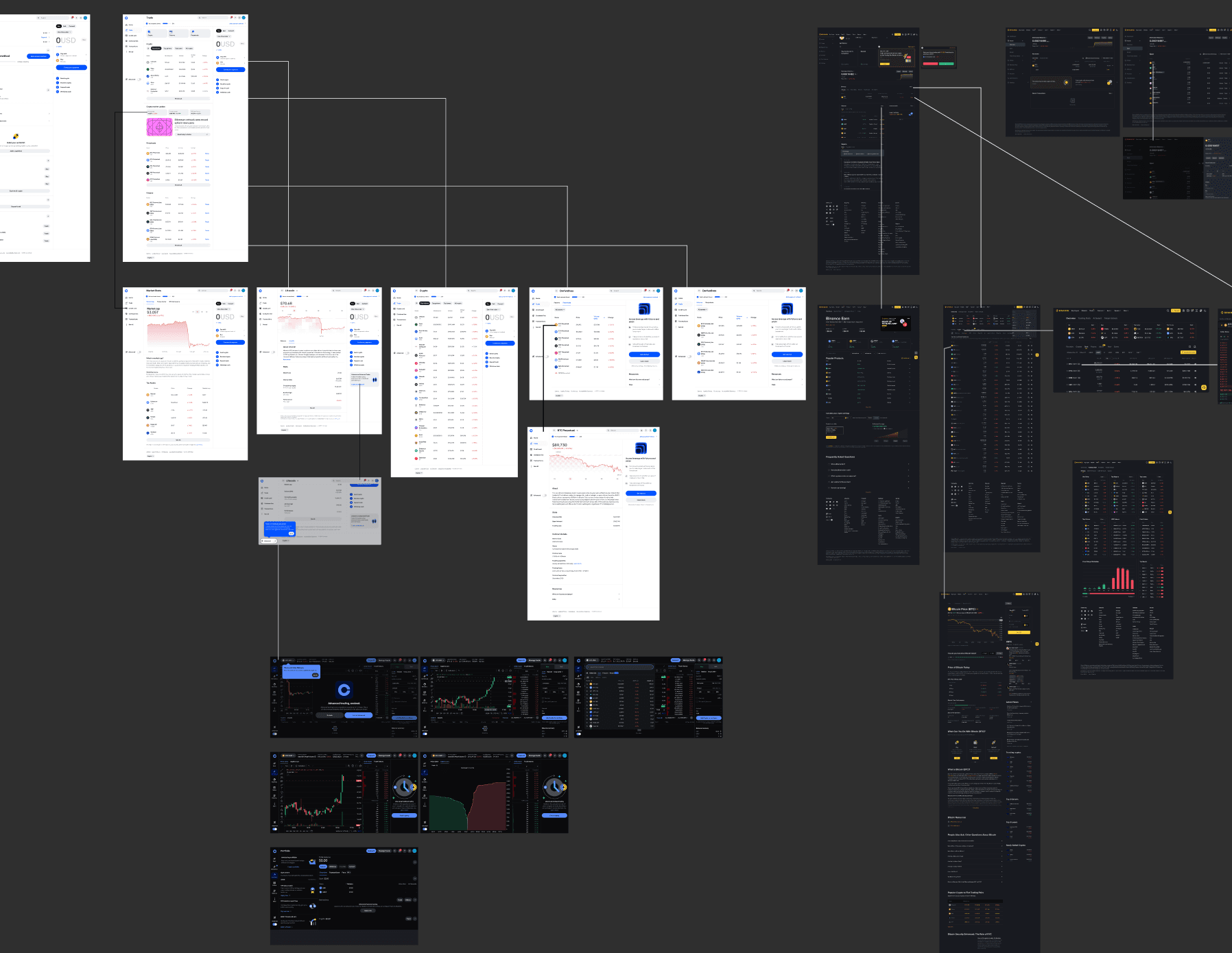
To understand what’s actually out there, I put some money into Binance, Coinbase, and Kraken and used them like a real user, Coinbase is clearest but shows no risk. Bybit surfaces risk well but is built for advanced traders. Binance and Kraken have the depth, but it's buried and takes time. to find.
03 – design with constrains
As much as I loved to, I can’t just do whatever I want.
I also kept in mind to approached this with real constraints. Binance operates across different regulations, so features like margin and futures can’t always be shown. Their backend splits assets into multiple wallets, which means I can’t just merge everything into one clean view. At the same time, trading drives revenue, so I had to surface it naturally without overwhelming the experience.
04 – How i got there
Making the complicated feel intuitive.
Humanized Data & Feedback
I introduced portfolio health scores, plain-language risk alerts, and contextual nudges that offering feedback, suggestions, and turning raw data into constructive guidance.
05 – the result
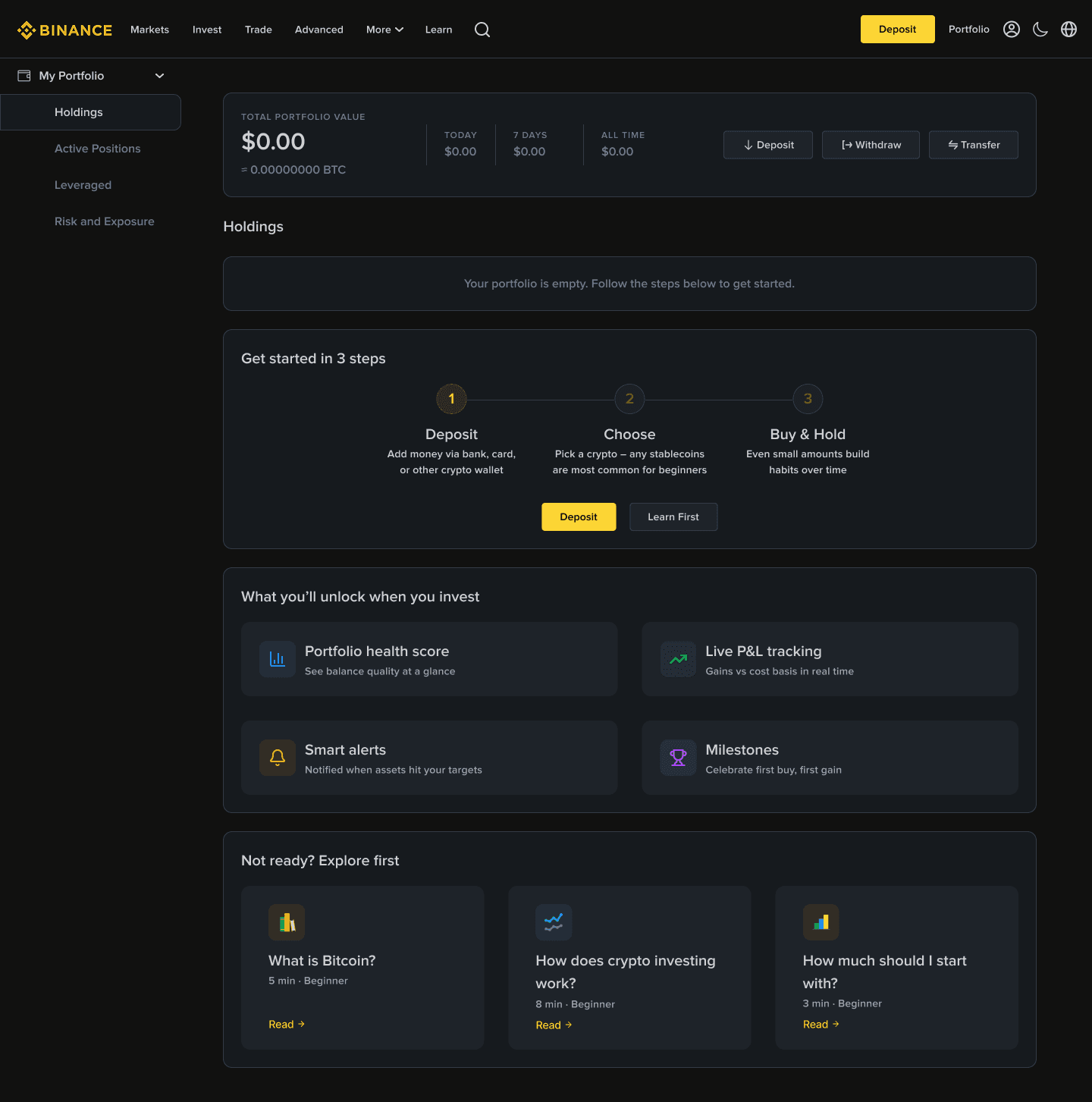
New user deserve a welcome mat
50,000 people sign up for Binance every day. Each one of them lands on a portfolio page with nothing in it currently. This new redesign provides guided 3-step onboarding with feature previews and educational resources.
Get started in 3 steps
The biggest drop-off is between signup and first purchase. Deposit → Choose → Buy & Hold breaks it down into clear steps. It reduces cognitive load and helps users take action immediately.
Show locked features
Health score, live P&L, smart alerts, and milestones appear grayed out with short explanations. Signals value without overwhelming.
“Not ready? Explore first”
Embedding short Binance Academy reads (3–5 minutes) directly in the portfolio lets curious users learn without leaving the app and keeping them engaged.
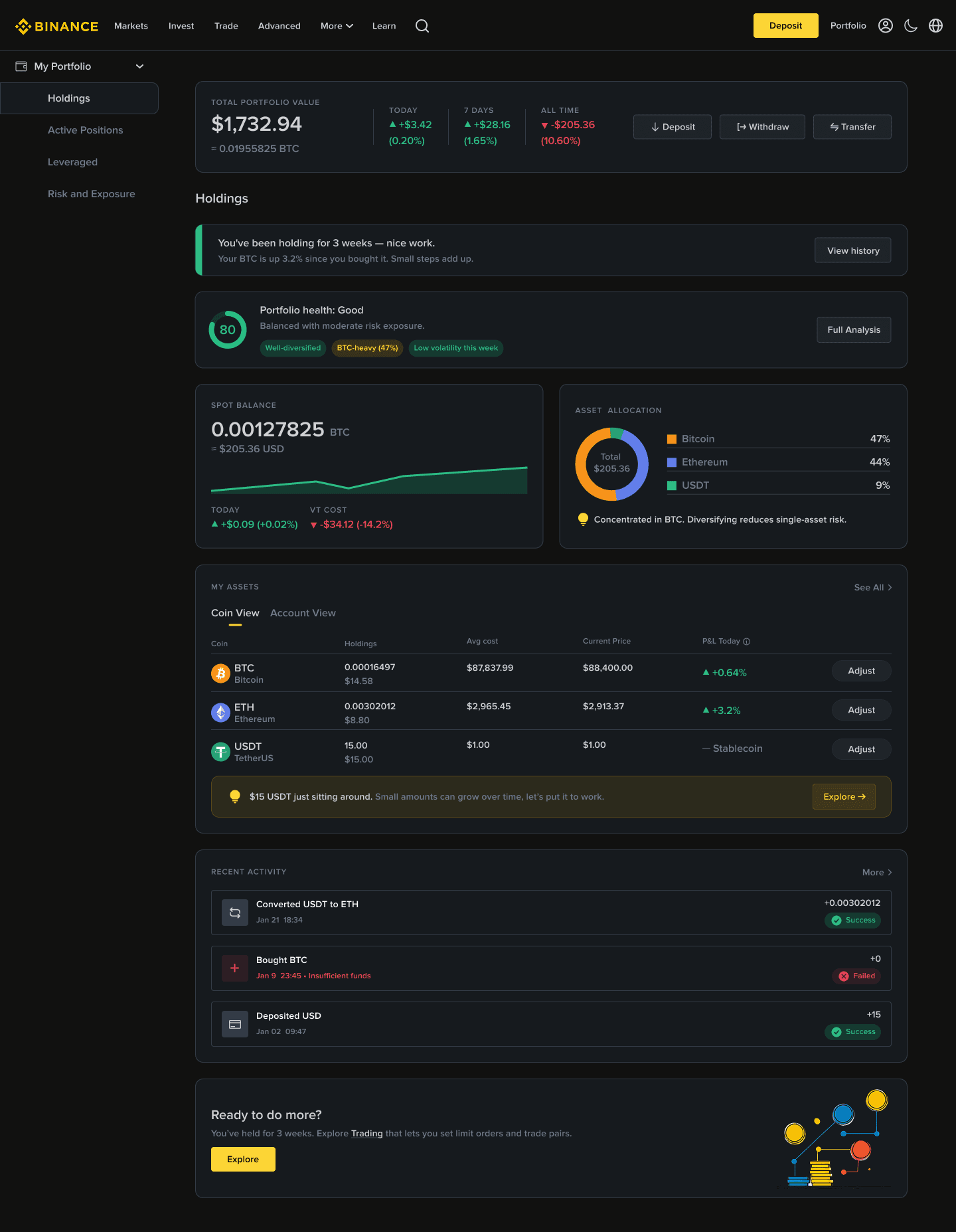
Holdings – the new home for your Portfolio
The first thing you see when you open your portfolio: overall portfolio health score, cost basis P&L, asset allocation, recent activity and simple CTA.
Why a portfolio health score?
A simple 0–100 score with plain-language explanations (like a credit score), it gives confidence without requiring financial literacy.
Personalize summary across all portfolio pages
Introduced small, human touches like “you’ve been holding for 3 weeks — nice work” Instead of just showing numbers. It acknowledges behavior and gives subtle feedback.
The “idle money” nudge
A small banner highlights when funds are just sitting there. It helps users take action and helps the business drive more activity.
CTA to keep the progression open
Prompts like "explore trading" make the next step visible without pushing.
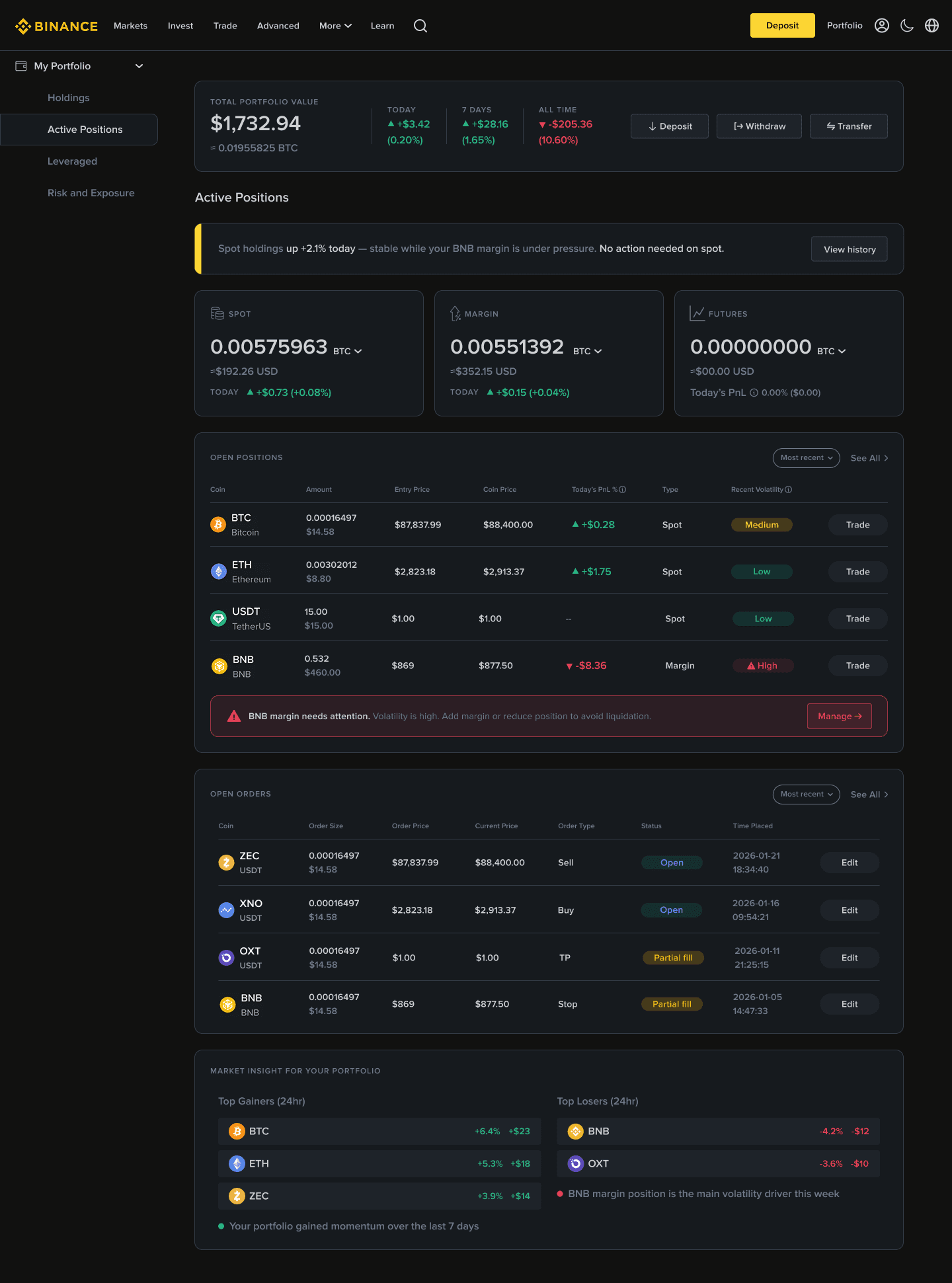
Active positives – Everything alive, in one view
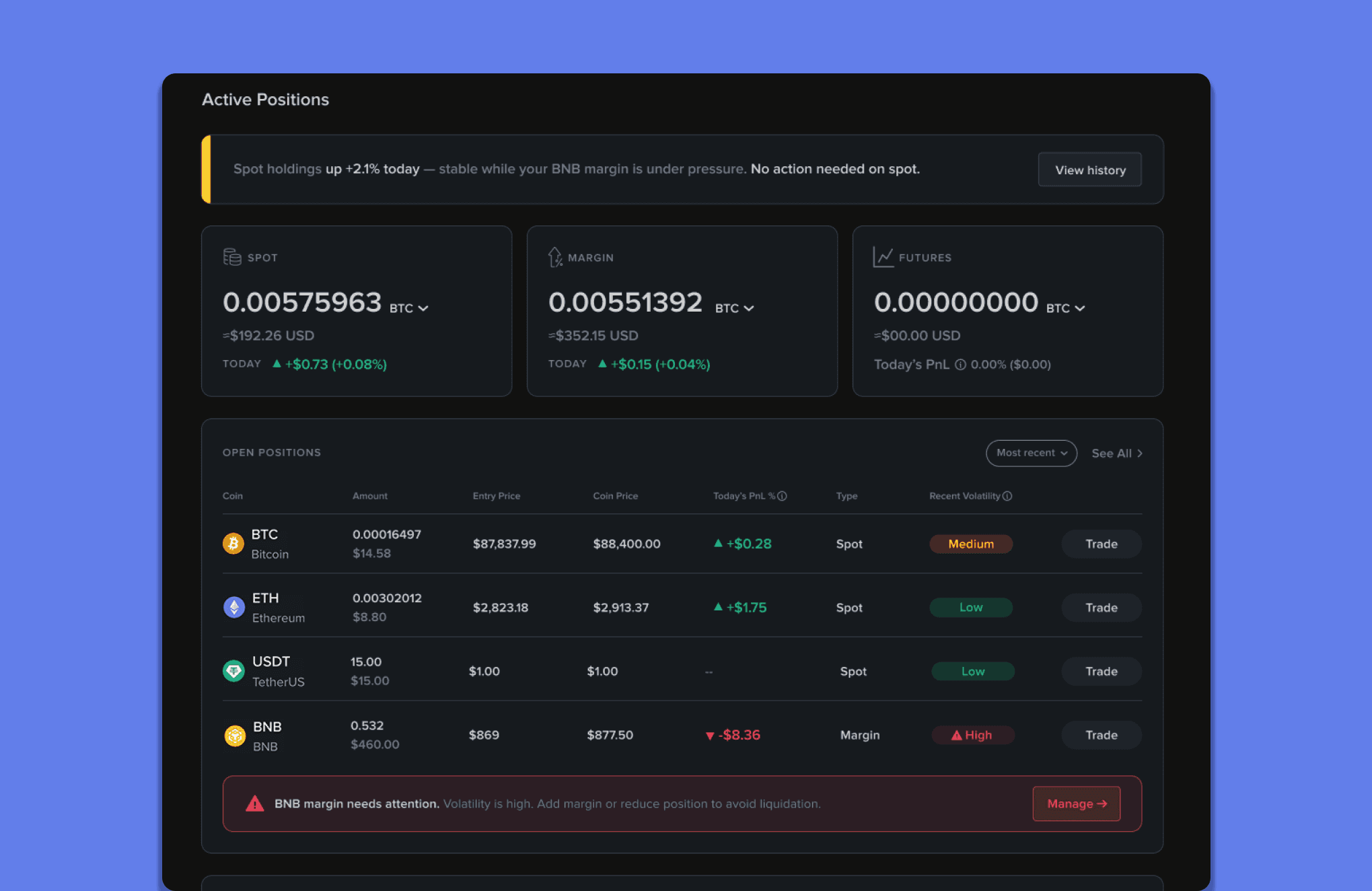
Active Positions page brings everything together — spots, margins, and open orders — into one single page, showing entry price, current price, P&L, type, and volatility at a glance.
Why merge spot and margin here?
From the user's view, they're all "things I'm holding." The wallet distinction is Binance's problem, not theirs. Each row is tagged Spot or Margin, so the info is there without a context switch.
Volatility badges
"Up $0.28" means little without context. Color-coded Low/High badges give eye catching visual feedbacks.
Surfacing position warning
Margin risk alerts move from a buried sub-page to a proactive surface-level CTA.
Personalized market signals
Incorporating your personalize "Market signals" turns generic market data into relevant, actionable insights.
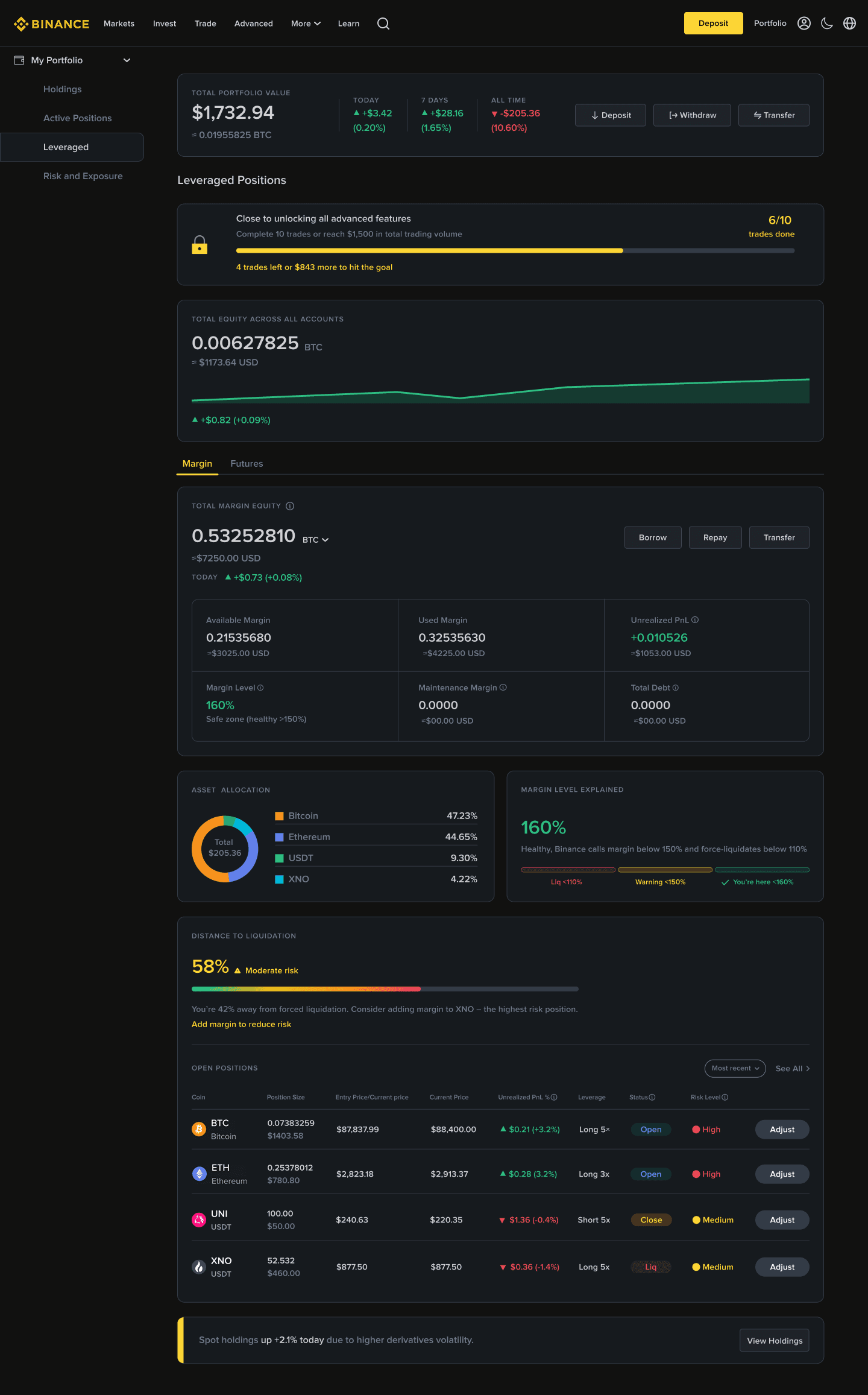
Leveraged – for advanced traders
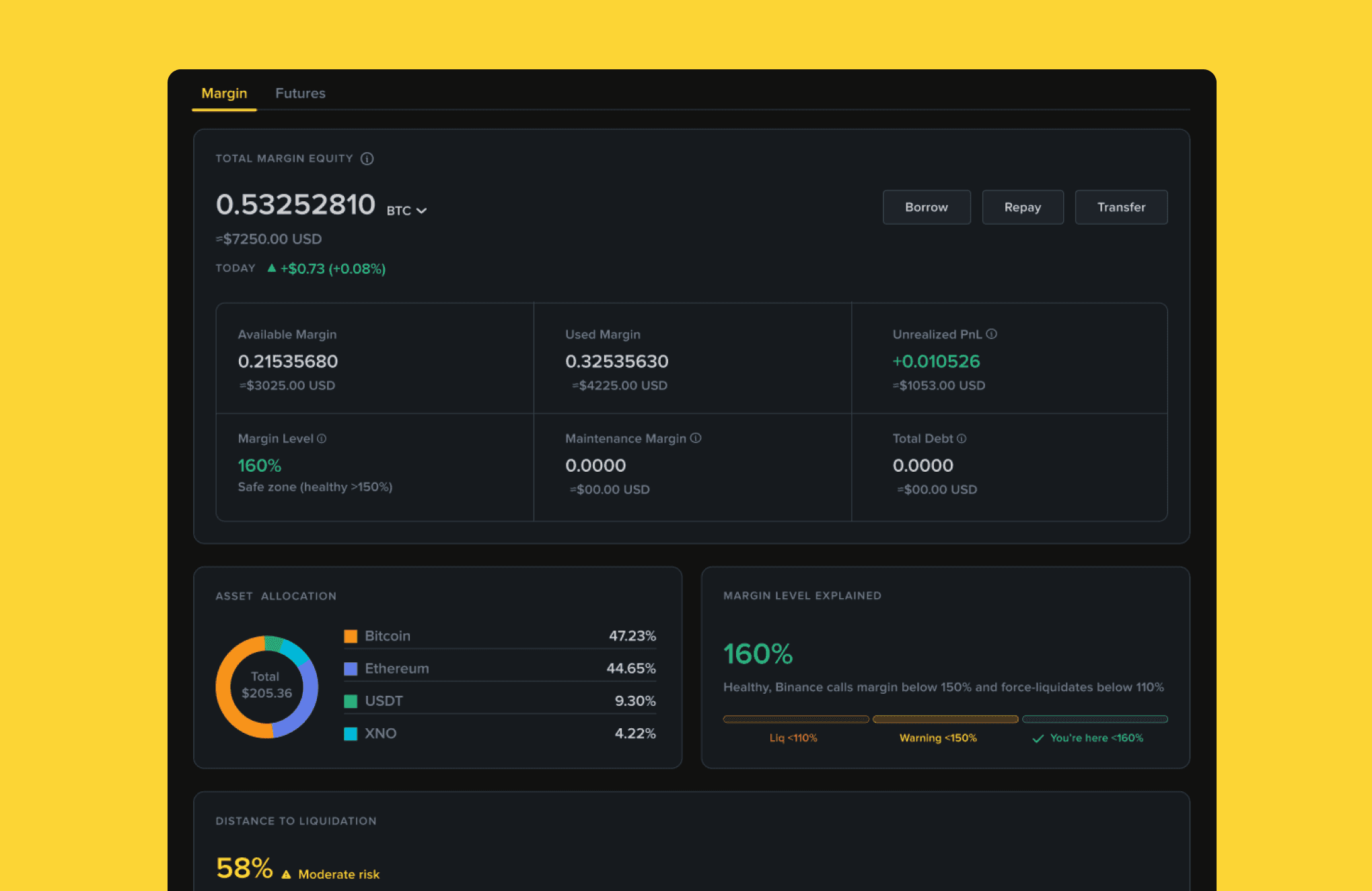
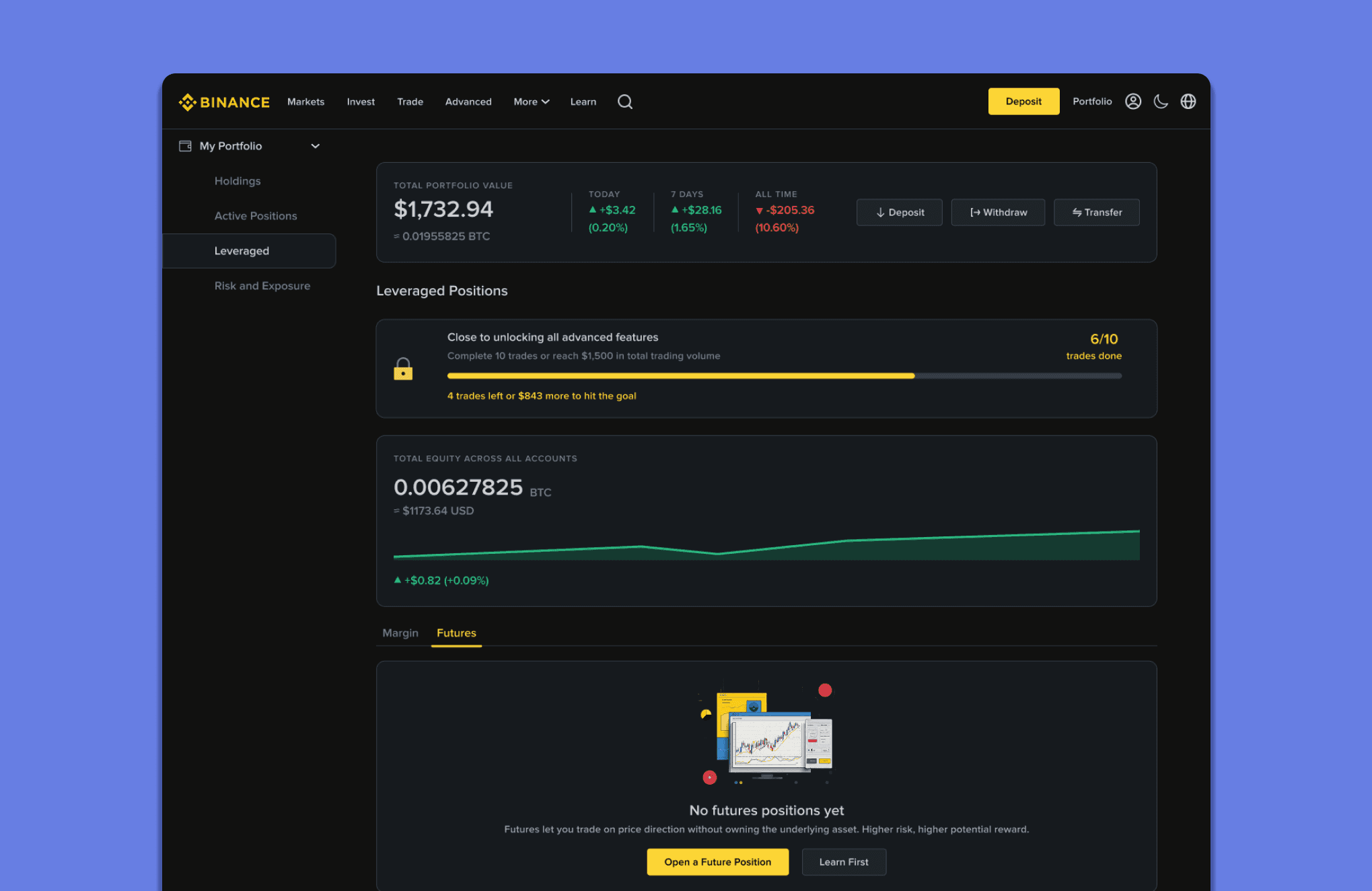
Margin and futures are where the most money is made and lost, yet critical info is scattered. That's why I gave leveraged positions a dedicated page.
Margin - Futures tab
I brought margin and futures into one page with a simple switchable tab. They’re closely related, so users can compare positions and exposure without losing context.
Why Margin level explain card?
"160% margin level" means nothing to most people. A visual gauge shows where you sit relative to warning and liquidation.
A gamification progress bar
"6/10 trades done — 4 more to unlock all features." Binance gates advanced features behind activity thresholds. I surface it to motivate progress.
When you haven't opened any futures positions, the current Binance shows a blank page. I introduced an empty state with a clear explanation and a risk-aware CTA– turning it into an in-product learning moment.
Risk & Exposure – A page that doesn't exist yet
No major exchange offers a dedicated risk dashboard. But understanding exposure matters more than tracking returns, especially with leverage. This page shows a risk score, key metrics, and actionable recommendations.
Why actionable recommendations?
Every recommendation links to an action the user can take immediately. Guidance, learning, and doing all happen in one flow.
Position needing attention
High-risk or liquidated positions are surfaced upfront, so users don’t have to dig to find what matters.
Surfacing position warning
High-risk and liquidated positions surface at the top with a clear action CTA, preventing users from missing critical alerts buried elsewhere..
A user who understands their risk profile is more likely to stay on the platform, increase deposits over time, and make informed decisions. Risk transparency builds trust, and trust drives lifetime value.
Reduction in "where is my money" support tickets
Portfolio page engagement time
Unexpected liquidations via proactive alerts